
Saturday, December 31, 2011

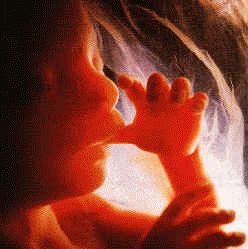
Your Baby's Development Month by Month


An Amazing Journey! LIFE!

At the miraculous moment of fertilization – when the egg of a woman and the sperm of a man unite, a new human life begins. From this moment on, it will take approximately nine months for the baby to develop and be ready to be born. Watch "85 Days," our TV commercial about your baby's development.

Babies come into this world one of three ways – early (premature), on time (born at the expected time), or late (after the expected due date). All babies, regardless of when they arrive, must go through the same developmental stages – usually a nine-month cycle. Let’s examine what happens before birth.

For the sake of clarity, please note that fertilization is placed at the beginning of Week 1. If you had intercourse multiple times since the end of your last menstrual period, it may be difficult to determine exactly the date of the baby’s conception and stage of fetal development.

Month One
Fertilization - the joining of the father's sperm and the mother's egg - this is when life begins. Fertilization can occur within minutes of intercourse or within two to three days afterwards. When fertilization occurs a new, unique human individual begins the journey of development. At the earliest stage, the new person is referred to as a zygote and is no larger than a single grain of sand. Cell division begins mere moments after fertilization.

Amazing Fact: At fertilization, every bit of genetic information necessary for the child's development is present. The "program" for everything is there: hair and eye color, skin tone, height - even likely giftedness as a pianist, vocalist or computer programmer.


A function called implantation happens from five to nine days after fertilization. Implantation occurs when the new human nestles him or herself in the wall of the uterus (or womb) and begins to draw nutrition. Once he/she has implanted, your baby is called a blastocyst and is about 0.1 - 0.2 mm in diameter.

This week your body will experience a hormone reaction to the presence of the developing baby. The result is that you stop menstruating. In other words, you miss your normal period.

Between weeks three and four (18 to 25 days after fertilization) the developing baby's heart begins to beat. Arm and leg buds form. The face – eyes, ears, nose and mouth - begin to take form.

Month Two
Your baby has only been developing for five weeks and is now 10,000 times larger than he/she was at fertilization. Your baby now is only about one inch long and weighs no more than one whole peanut. The lining of the placenta begins to develop but does not take over the production of hormones until about week 12. Brain waves are detected.

Amazing Fact: It's a good thing this blazingly fast growth rate slows down after the second month, otherwise the baby's birth weight would exceed 10 tons!


Your baby’s heart is bulging from the body and blood circulation is well established. Early evidence of the liver, pancreas, lungs and stomach can be seen. When you see your baby through ultrasound at week six, you'd be amazed by how much he or she has already developed.

Genitals are present but you can't distinguish boys from girls at this point. The pumping action of your baby's heart is about 20% of your own heart's capacity.

Amazing Fact: Your baby will actually go through three sets of kidneys during his or her development. By week seven, your baby is already on the second set!


By this time, the end of month two, your baby receives a new technical name to describe his/her development: fetus, a Latin word which means "young one." All organs are present - and most are functioning - although some need more time to develop. The irises of the eyes develop, fingernails are visible and your baby can curl his/her fingers around an object. He or she also hiccups, has taste buds on the tongue and tooth buds in the gums.

Amazing Fact: If your health provider uses a "Doppler," you may be able to hear your baby's heartbeat during your week 10 visit. It will sound very fast. Your risk of miscarriage is greatly reduced after you hear this sound. Just click either link to listen!


baby's heartbeat.mp3

baby's heartbeat.wav

The baby’s mother and father can also see their baby in the womb through 3D/4D ultrasound imaging. Most doctors use ultrasound to trace the baby’s development throughout pregnancy.

Month Three
Your baby can smile, make funny faces. She/he can practice “breathing” the amniotic fluid in/out of the lungs, all 20 teeth are formed and waiting to develop. Your baby is now approximately one ounce in weight, as is the placenta. The pancreas has now started to secrete insulin. This is also the time of peak movement for the baby. The movement can not be felt by the mother but the baby rarely pauses for more than five minutes at a time. He/she may change position as often as 20 times an hour even if the mother lies still. The baby also feels the mother’s motions at this time and rocks in the womb as the mother moves.

Amazing Fact: Amniotic fluid completely regenerates itself every three hours. While we know for sure that this fluid is partly made up of urine from the baby, science still has not discovered what makes up the other parts. As advanced as modern medicine is, some mysteries remain!


Amazing Fact: What was that noise? At 15 weeks, loud sounds may actually cause baby to startle. Some moms and dads find that quiet music played near mom's tummy will cause baby to relax and calm down.


Month Four
Your baby is now about eight inches tall from head to toe. Baby’s movements can now be felt by his/her mother and he/she can suck his/her thumb. The fingernails are now well-formed and often need to be trimmed at birth because they have grown so long. Baby is emptying his/her bladder every 40-45 minutes. The placenta is fully established by now. Another critical part of the baby’s growth is the umbilical cord. The umbilical cord is attached to the placenta, not the mother, and serves to provide baby with the needed nutrients for the rapid growth the baby is now experiencing. Fingerprints are now evident.

Month Five

Amazing Fact: "Why can't I sleep through the night?" Many moms find themselves asking this question. The simple answer is you have a son or daughter inside you who lives on a different sleep/wake cycle than you do. Some kids consistently wake mom at 3 a.m. every morning. Chances are, after baby is born, he or she will want to be active about this same time!


Baby’s weight will increase to approximately 15 ounces by the end of the fifth month. Hearing is very acute and activity continues to increase as the baby swims around in the amniotic fluid. The baby’s body shifts to a head-down position in preparation for birth in a few months. Eyebrows have developed. Lanugo, (fine hair) begins to appear on the baby’s body. Sometimes this lanugo remains on the body after birth. Also, a creamy white substance (named vernix) clings to the baby’s fine hair and in creases of the skin. It is believed that this “skin cream” protects the baby during the remaining weeks of pregnancy. This substance is sometimes seen after birth.

Month Six
By now your baby has gained another pound. His/her hand coordination has increased and the baby can now move the thumb in opposition to the fingers. Eyes are now open though the baby is still in the darkness in the womb. Little deposits of fat, which retain heat, begin to form. The uterus allows some light to be seen so the baby begins to distinguish between lightness and darkness.

Month Seven
Baby’s skin is wrinkled from so much time floating in water. The skin will stay this way until a few weeks after your child’s birth. Your baby’s eyelashes are developing and fat continues to be deposited beneath the skin. If you have a baby boy, his testes will probably begin descending. Now into his/her seventh month of development, a baby born at this time has a good chance of survival with the help of medical technology. Your baby also is beginning to regulate his/her body temperature. The baby’s temperature will always be warmer than the mother’s.

If you are having Braxton Hicks Contractions, they are a sign that your body is getting ready for labor. The baby notices the contractions, but is not adversely affected by them.

Your baby now weighs two to four pounds.

What are Braxton Hicks contractions?
Named for J. Braxton Hicks, who first made note of them in 1872, Braxton Hicks contractions are an occasional (and unpredictable) tightening of the uterus during the first and second trimesters of a pregnancy. Usually these contractions are not painful and do not indicate that labor has begun. Third trimester Braxton Hicks contractions may increase in frequency and may cause the mother some degree of pain. These contractions may even occur with a regular rhythm (10 to 20 minutes apart) and are sometimes called false labor pains. The only way to be absolutely certain that the contractions are indeed false labor pains is for mom to be examined by her doctor.

Month Eight
Baby’s irises can now dilate and contract in response to light; weight is now about four to six pounds. Sleep and waking become more differentiated toward the end of the eighth month. Four distinctive behavioral states become recognizable and these will continue to be characteristic in the baby’s behavior in the weeks beyond birth. These are sleep, awake, actively awake and crying. Your baby's body is now producing a chemical (called a surfactant) which helps baby breathe after birth. The surfactant is coating the alveoli in the lungs. Baby weighs about four pounds (1.8 kilograms). Babies born after this week have fewer breathing problems at birth.

Amazing Fact: Baby has put on about two pounds of weight, mostly fat and muscle tissue, since last month. Measurements to 40 cms or 15.8 inches.


Month Nine
Baby weighs about five to seven pounds, and puts on about half a pound a week now. All organ systems are completing development for birth. Baby gains his/her “fat cheeks” during the ninth month. Mother’s antibodies pass through the placenta to provide baby with immunity from measles, chicken pox, whooping cough and other illnesses.

Amazing Fact: In the days and hours prior to your baby's birth the amniotic fluid is continually replaced, even in labor, at the rate of once every three hours.


Chances are good that your baby is one of the 90% who is head down and deeply snuggled into your pelvis. The immune system is still immature and the baby receives antibodies from the placenta and after birth will receive antibodies continually from mother’s breast milk. Most of the lanugo has fallen off the baby's body, although you may still find some hidden in spots, particularly in the creases, and around the shoulders or ears.

The average baby will be about 7.5 pounds (3.4 kilograms) and 20 inches long at birth. The placenta will weigh about one eighth the size of the baby and the umbilical cord will be about the same length as the baby. The baby will be judged, at birth and five minutes later, with an Apgar score.

What is an Apgar score?
Virginia Apgar, M.D., gets the credit for developing the APGAR score in 1953. She wanted to provide moms, dads and hospital staff with a uniform method of measuring the initial health of a newborn. The test looks at five different signs of health: heart rate, respiratory rate, reflex irritability, muscle tone and color.

Happy birthday, baby!

Reprinted with permission Wisconsin Right to Life

Friday, December 30, 2011

Nazareth - Pope Paul VI

I have been rather remiss in posting here; too much activity and too many distractions.

But in today's Office of Readings, the second reading touched me, which I thought I would share. It is by Pope Paul VI on his visit to Nazareth; his Pilgrimage to the Holy Land at the Basilica of the Annunciation in Nazareth, January 5, 1964


Lessons of Nazareth

Nazareth is a kind of school where we may begin to discover what Christ's life was like and even to understand his Gospel. Here we can observe and ponder the simple appeal of the way God's Son came to be known, profound yet full of hidden meaning. And gradually we may even learn to imitate him.

Here we can learn to realise who Christ really is. And here we can sense and take account of the conditions and circumstances that surrounded and affected his life on earth: the places, the tenor of the times, the culture, the language, religious customs, in brief, everything which Jesus used to make himself known to the world. Here everything speaks to us, everything has meaning. Here we can learn the importance of spiritual discipline for all who wish to follow Christ and to live by the teachings of his Gospel.

How I would like to return to my childhood and attend the simple yet profound school that is Nazareth! How wonderful to be close to Mary, learning again the lesson of the true meaning of life, learning again God's truths. But here we are only on pilgrimage. Time presses and I must set aside my desire to stay and carry on my education in the Gospel, for that education is never finished. But I cannot leave without recalling, briefly and in passing; some thoughts I take with me from Nazareth.

First, we learn from its silence. If only we could once again appreciate its great value. We need this wonderful state of mind, beset as we are by the cacophony of strident protests and conflicting claims so characteristic of these turbulent times. The silence of Nazareth should teach us how to meditate in peace and quiet, to reflect on the deeply spiritual, and to be open to the voice of God's inner wisdom and the counsel of his true teachers. Nazareth can teach us the value of study and preparation, of meditation, of a well-ordered personal spiritual life, and of silent prayer that is known only to God.

Second, we learn about family life. May Nazareth serve as a model of what the family should be. May it show us the family's holy and enduring character and exemplify its basic function in society: a community of love and sharing, beautiful for the problems it poses and the rewards it brings, in sum, the perfect setting for rearing children - and for this there is no substitute.

Finally, in Nazareth, the home of a craftsman's son, we learn about work and the discipline it entails. I would especially like to recognise its value - demanding yet redeeming - and to give it proper respect. I would remind everyone that work has its own dignity. On the other hand, it is not an end in itself. Its value and free character, however, derive not only from its place in the economic system, as they say, but rather from the purpose it serves.

In closing, may I express my deep regard for people everywhere who work for a living. To them I would point out their great model, Christ their brother, our Lord and God, who is their prophet in every cause that promotes their well being.

Tuesday, December 6, 2011

The Smaller Beatitudes

The Smaller Beatitudes

This article appeared in my parish’s recent Sunday bulletin.

Blessed are those who can laugh at themselves: they will have no end of fun.
Blessed are those who are sane enough not to take themselves seriously: they will be valued by those about them.
Happy are you if you can appreciate a smile and forget of frown: you'll walk on the sunny side of the street.
Happy are you if you know how to hold your tongue and smile, even when people interrupt contradict you or thread on your toes: the Gospel has begun to seep into your heart.
Above all, blessed are you when you recognize the Lord in all whom you meet: the light of truth shines in your life and you have found true wisdom.

– Joseph Follett, via Rev. Taras Miles, Belfield, ND

Sunday, October 16, 2011

Fact vs. Fiction

A good article by Paul Greenberg in Townhall.com, October 13, 2011. I quote:

...Mere facts may prove no match for partisan passions. It hasn't been too long since I saw a letter to the editor presenting a number of left-wing talking points only thinly disguised as innocent questions asked in good faith. The question at the top of the list stuck in my mind because it's one of the more persistent smears directed against the pro-life movement, no matter how many times it's been refuted.

In this version, the myth appeared as (rhetorical) Question No. 1:

"How come pro-life folks don't care enough to adopt and/or support by taxation those children they insist be born?"

The list of questions ended with a dare: "Hard questions? Yes. Who has the guts to answer them?"

Allow me to take apart the assumptions underlying just Question No. 1. For I am allotted only so much space, not that the assertion about pro-lifers' not supporting kids after they're born is very hard to answer. Evidence to the contrary abounds. As in all the help that pro-life groups offer mothers who, despite all the pressures, decide to have their baby instead of an abortion....


See the whole article here.

Life in the Womb


National Right to Life Committee's web page has a series of short audios describing life in the womb. I found them very interesting. Here is an excerpt:


LIFE IN THE WOMB, PART 5

“The five-month-old child in the womb is approximately 10” long. She is extremely active, will swim about in the amniotic sac until growth makes the space in the womb too tight for easy movement. It has been shown that newborn babies can swim reflexively when placed in water, using an efficient frog kick.”

Each stage provides marvelous illustrations of intricacy, complexity, and unfolding beauty. The interplay between mother and child is nothing short of wondrous

“Between 5 and 6 months, the mother begins to notice that her unborn child jumps in response to loud noises coming from the environment”; “babies are naturally attracted to the sound of the human voice and this process begins in the womb. Research has suggested that newborn babies react with greater interest to the voices of family members (as opposed to strangers) because they have had experience hearing these voices for so many months while being carried in the womb”; unborn babies at this age respond to the environment. They react if the mother suddenly is immersed in cold water. If the mother turns over at night, they may have to change their position in the womb to “get comfortable” again. “

Saturday, September 24, 2011

The Abject Poverty of the Unborn, Unwanted Child

The Abject Poverty of the Unborn, Unwanted Child
BY BISHOP THOMAS J. TOBIN
8/18/11


A few weeks ago, during the acrimonious debate over the debt limit and deficit reduction, a number of religious leaders met with President Obama to ask him not to forget the poor as our nation struggles with its financial crisis.

Commenting on the meeting, Catholic Bishop Ricardo Ramirez, said, “We’re not interested in which party wins the current political battles but we are worried about who is likely to lose – the families trying to feed their kids, the jobless looking for work, children who need healthcare, the hungry, sick and hopeless.”
The religious leaders are part of the Circle of Protection, a non-partisan movement that works to protect the poor and vulnerable in the midst of the challenges presented by a flagging economy. The Circle of Protection includes religious leaders as well as heads of community organizations and agencies.


The American Bishops have also chimed in with their own statement on behalf of the poor: “Their voices are too often missing in these debates, but they have the most compelling moral claim on our consciences and our common resources . . . A just framework for future budgets cannot rely on disproportionate cuts in essential services to poor persons.”

Most people would agree, I think, that one of the primary responsibilities of the government – federal, state and local – is to provide a safety net for the poor. While churches and non-profits, community groups and even individual families can and should do their part to assist their neighbors in need, it’s only the government that has the financial resources and political infrastructure necessary to respond in a systematic way to the enormous social needs of our time – providing food for the hungry, suitable housing for the homeless, basic healthcare for the sick, sound education for children and opportunities for productive employment. The religious leaders who met with the president were absolutely correct in reminding him of this obligation and encouraging his support. Other political leaders – on a national, state and local level – should be challenged as well.

It occurs to me, however, that if the religious leaders who met with the president to advocate for the poor didn’t use the opportunity to speak on behalf of another endangered population, unborn children – and I’ve seen no report that they did – they missed an important opportunity to instruct and challenge the president on the most substantive moral issue of our time, abortion. The religious leaders had a chance to be courageous prophets, to speak moral truth to secular power. And that opportunity was critical because President Obama is the most ardent pro-abortion advocate we’ve had. It is an evil agenda he pursues aggressively at every turn.

Obviously it’s good, essential in fact, that religious leaders speak on behalf of the poor. That advocacy is a primary obligation of faith. But I can’t think of anyone poorer or more vulnerable than an unborn, unwanted child.

We speak of homelessness – but who’s more homeless than the unborn, unwanted child about to be destroyed, not even finding warm shelter in his mother’s arms? We speak of hunger – but who’s more in need of sustenance than the unborn, unwanted child totally dependent on the compassionate care of others? We speak of welcoming immigrants and refugees – but who’s more alienated than an unborn, unwanted child who’s viewed as a burden and then exiled from the human family? And we speak of being weak and disenfranchised – but who has any less control over their own fate than an unborn, unwanted child who will never have a place at the table, whose tiny voice will never be heard?

Now, lest I’m accused of being a single-issue bishop or narrow-minded, ignoring other important social justice issues – and it’s a charge I’ve endured in the past – permit me to present this little apologia for some of the other issues in which I’ve been involved. In my earliest days in Providence I visited with and supported the “Janitors for Justice” during their labor protests. I’ve marched in our streets for affordable housing and publicly supported the bond issue for the same cause. I founded and have enthusiastically supported the “Keep the Heat On” program which has provided heating assistance for thousands of families across our state. I directed that diocesan property be used to establish Emmanuel House, a shelter for the homeless during a difficult, even dangerous winter. I’ve regularly visited our adult prison, the ACI, and have met and prayed with the inmates. I’ve toured numerous community programs and social agencies in our state to learn about their services and needs, and have sent financial grants to soup kitchens and food pantries. And I’ve provided a strong and consistent voice on behalf of the immigrant community – documented and otherwise – despite being personally vilified for presenting the position of the Church on that divisive issue.

Please understand that I mention these initiatives not to boast, nor to claim any special credentials but, simply to say that I, like the institutional church itself, am committed to many social justice issues beyond that of the unborn child. Some have accused pro-lifers of being concerned about children only until they’re born. It’s a ridiculous and scurrilous charge!

At the same time, it’s also quite reasonable to insist that the social justice agenda include concern for, and public advocacy for, the poorest, most vulnerable members of our human family – unborn, unwanted children. And at every opportunity we need to challenge our public leaders on this issue, especially those who talk a good game about social justice but actively contribute to the culture of death around us.

From: http://thericatholic.com/opinion/detail.html?sub_id=4256

Thursday, September 22, 2011

Urgent - Action Urged


On September 9th, the Bishops of the Catholic Conference of Illinois issued a letter to Kathleen Sebelius of the Department of Health and Human Services, expressing their opposition to the Interim Final Rules on Preventive Services. The two objectionable rules are: 1) a mandate on all private health care plans to cover prescription contraceptives approved by the FDA — including abortifacient drugs — surgical sterilizations and related patient in education and counseling; and 2) an incredibly narrow definition of religious lawyer for exemption from the mandate.

Our faith teaches that human fertility cooperates with God in the creation of new human life and ensures the extension and prosperity of our society. The government's treatment of pregnancy as a disease to be prevented or terminated on any whim undermines not only our teaching, but also the respect for human sexuality and human life intrigues that too well ordered society....

The Catholic Church's teaching on the immorality of contraception and sterilization as a rejection of God's gift life-giving will may not enjoy popular support. The church may be one of the last major structures in American society to hold this belief. For this reason, the rule seems not only to target religious freedom generally but Catholicism in particular — an egregious violation of the free exercise and establishment clauses of the First Amendment....

For these reasons, we ask that the regulation be revoked. If not, we urge modification to embrace and defend the public ministry of religious institutions. Signed by: Cardinal Francis George; Thomas G Doran, Bishop of Rockford; Daniel Jenky, Bishop of Peoria; Edward Braxton, Bishop of Belleville; Thomas John Paprocki, Bishop of Springfield-in-Illinois; and Daniel Conlon, Bishop of Joliet.

In addition, the United States Conference of Catholic Bishops released a nationwide bulletin insert with an urgent plea to respond by September 30.

ACTION: Please send an e-mail message to HHS by visiting www.usccb.org/conscience. Once you send your comments to HHS, you will be automatically invited to send a message to your elected representatives in Congress, urging them to support the Respect for Rights of Conscience Act (H.R. 1179/S. 1467) to ensure that such federal mandates do not violate Americans' moral and religious convictions.

Please do this by September 30th

Sunday, September 18, 2011

For the Record: Personhood


H/T The Catholic Knight. Read his post here.

Friday, September 16, 2011

Archbishop Chaput's New Coat of Arms

With his appointment as Archbishop of Philadelphia, Archbishop Chaput has a new coat of Arms.
You can see the explanation here.

The New Translation of the Mass


H/T Crossed the Tiber