Showing posts with label Year of Faith. Show all posts

Monday, July 1, 2013

‘We Need to Be Active Witnesses of Our Faith’

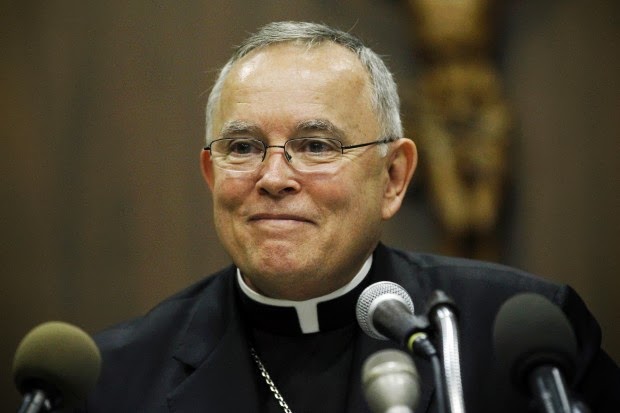
I love Archbishop Chaput. He always seems to hit the nail on the head. On June 22 he gave a speech honoring St. Junipero Serra. He speaks of our mission, the new evangelization, St. Francis and Fr. Serra. It is excellent. Below is an excerpt. I hope it encourages you to read the whole speech. It can be found here.


The “how” of a New Evangelization, or any evangelization, needs to begin with our own repentance and conversion. That hasn’t changed since Father Serra walked the Camino Real, the trail that linked California’s missions. We can’t give what we don’t have. 
As individuals, we control very little in life; but we do control what we do with our hearts.  We can at least make ourselves available to God as his agents. Personal conversion is the essential first step. It immediately affects the people around us. 
The “how” also requires us to understand the real human terrain we’re called to convert. 

Christian Smith, Notre Dame’s distinguished social researcher, suggests that the de facto dominant religion among American teenagers today is “moralistic therapeutic deism.” And he frames the creed of this new religion in this way:

First, a God exists who created and orders the world and watches over human life on earth. Second, God wants people to be good, nice and fair to each other, as taught in the Bible and most world religions. Third, the central goal of life is to be happy and to feel good about oneself. Fourth, God doesn’t need to be particularly involved in one’s life, except when he’s needed to fix a problem. And, fifth, good people go to heaven when they die.

“Teen religion” largely derives from the world of adult religion, especially parental religion, and it flows naturally from what the parents of these teens actually practice.  Old patterns of religious faith among many adults have faded into a kind of vague “spirituality,” which then shapes the world into which American adolescents are socialized.

For many young people, the moralistic part of “moralistic therapeutic deism” simply means being pleasant and responsible, working on “self-improvement,” taking care of one’s health and doing one’s best to succeed. “Therapeutic” means focusing on feeling good and happy, being secure and at peace. It’s about subjective well-being and getting along amiably with other persons. And “deism” means that God exists — he created our world — but he’s not particularly involved in our affairs, especially when we don’t want him around. He’s available to meet our needs. He’s not demanding on us, but we can be demanding on him.

Obviously, very little of this has anything to do with the Gospel of Jesus Christ or the faith of the martyrs. And that’s a problem.
In practice, American society now breeds a kind of radical self-focus and practical atheism — not by refuting faith in God, but by rendering God irrelevant to people’s needs and urgencies of the moment. 

As Christopher Lasch saw in The Culture of Narcissism, consumer culture tends to create weak personalities dependent on group behavior and approval — and therefore more susceptible to advertising and product consumption. The hard and social sciences replace the clergy as a source of guidance and meaning. And social media and mass entertainment abolish solitude and personal reflection.  

So, in an age of massive self-absorption, the result is that real individuality and self-mastery are withering. Why? Because the communities that root and shape an individual in distinctive moral codes and histories — in other words, our families, churches, synagogues and fraternal organizations — can’t compete with the noise and flash of consumer society.

Here’s what that means for all of us as believers:  A “new” evangelization must start with the sober knowledge that much of the once-Christian developed world, and even many self-described Christians, are in fact pagan. 

Christian faith is not a habit. It’s not a useful moral code. It’s not an exercise in nostalgia. It’s a restlessness, a consuming fire in the heart to experience the love of Jesus Christ and then share it with others — or it’s nothing at all.

Mastering the new social and demographic data that describe today’s world, and the new communications tools to reach it, are vitally important for the Church. 


But nothing can be accomplished if we lack faith and zeal ourselves. We — and that means you and I — are the means God uses to change the world. The material tools are secondary. People, not things, are decisive.

Sunday, January 27, 2013

The Year of Faith, The New Evangelization


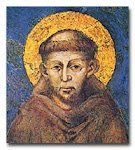
From time to time I have been posting something that relates to the Year of Faith and the New Evangelization. By our Baptism and Confirmation we are all called to spread the Gospel. This is a most urgent need as we are living in a culture that is contrary to our beliefs in so many ways. As Francis says, and if I may paraphrase – we are to preach the Gospel at all times and when necessary to use words.

Family, friends, neighbors and our co-workers should know we are practicing Catholics. We should not be afraid to mention our faith or church teachings to others, we can mention it in normal social conversations, we can teach others our beliefs in conversations about issues. We do not need to brow-beat others, but by example urge them to consider their relationship with God. If we show how much our faith means to us, they just might get it.

We cannot evangelize/attract others if we do not show them our enthusiasm, our joy in our faith. We will not attract anyone if we are dour or overly pious. We need to show them we are real people who are searching and messing things up just as they. We can’t just preach to the choir. At times we need to get our hands dirty and break bread, as Jesus did, with tax collectors and prostitutes; read the un-churched, the pro-abortionists, the hedonists, materialists, individualists, etc.

The new evangelization does not take us on missionary journeys to the far reaches of the world, but occurs in our workplaces, social gatherings, backyards, and even in our own homes; and perhaps as important, within ourselves. For we need to evaluate and ask ourselves, “Am I living the gospel life?” Are we shy in bringing up our faith in our own families? We need to educate ourselves not only with scripture reading, but we need to know and relearn our catechism and church teachings. If not, we will not be able to add to conversations especially in the areas of morals and values.

More is accomplished over a dinner table, or a group discussion than that of any number of dignitaries and experts meeting for weeks to issue documents and statements of position.

If we truly care about our brothers, sisters, family, friends, neighbors, co-workers – and we are taught our enemies as well – then we must be willing to share our faith and help bring them to everlasting life.

Below is an excerpt from article by Cardinal Wuerl on the Year of Faith and the New Evangelization I ran across in Our Sunday Visitor. I hope it has some meaning for you.


Experiencing Christ through the sacraments
The Church and its sacraments are a continual reminder to us of God, God’s love and God’s place in our lives
By Cardinal Donald Wuerl - OSV Newsweekly, 1/27/2013

Each year, couples from all over the archdiocese gather at a Mass in which we recognize their anniversaries, ranging from 25th to 50th and beyond. On rare occasions we have celebrated 70th wedding anniversaries. 

[ Deleted upon request....]
Read the rest of the article here.

Sunday, December 16, 2012

Year of Faith – Reflection II

Year of Faith – Reflection II

Since the Bears are losing and I lost interest in the game, and since I have a new PC after all the aggravations of a vicious virus in both my PC and laptop, since it has been a while, I thought I would take some time to write another reflection based on some current events.

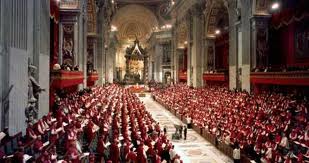
Perhaps you are not aware–and I wonder why you would be with the Catholic news blackout by the mainstream media–there was a Synod of Bishops in October to discuss the many current issues facing the Church. There were 49 Cardinals, 71 Archbishops, 127 Bishops, and 14 Priests. There were also 72 collaborators, included among them many non-Catholics. So if you had not heard of this it shows we need to support the Catholic media and I will add I think our parishes can do a better job keeping us informed.

The theme of this synod was “The New Evangelization for the Transmission of the Christian faith.”  The New Evangelization is not a focus of bringing non-Christians to the faith, as much as it is an outreach to bring back those who have left the church. Especially in this Year of Faith, it also means re-evangelizing ourselves; to read Scripture more, to become familiar with the Vatican II documents and the Catechism. You may say, “Hey, I’m a Catholic. I go to Mass;” or something like it. Well, we are all in need of ongoing formation. Not just as Franciscans, but as Catholics too. “Why” you might ask? Very simply, we are living in a very secular society with a government doing its best to get rid of God in the public forum. Here is a test: Do you feel uncomfortable talking about your faith in public, to family and friends? Aware of it or not, we are affected by the secular society, in the news, in movies, in our acceptance of political correctness.  For many Catholics things that were abhorrent to them 30 years ago, became less so 20 years ago, 10 years ago it was “well if they don’t bother me,” or “keep it in private.” And now, it is acceptance. There is also a lot of indoctrination especially in schools.

I would say this rejection of Catholic faith, morals, and teachings began with the rejection of Humane Vitae and the Church’s teachings on the Pill. If we can reject that, we have already opened the door; it is easy to reject other teachings. Just like sin. Commit a sin once and it is easier to commit that sin again. I've recently said in a discussion group at my parish that it is not for the Church to conform to our wishes/demands, but for us to accept and conform to the Magisterium’s teachings. This is our Rule, this is our life, and this is our duty.

Is the problem serious? You bet it is. Pew Research learned that 62% of Catholics who attend Mass weekly believe abortion should be illegal. What, only 62%? My God, it should be 100%. Of those who attend Mass less frequently the number drops to only 27% who believe it should be illegal. The same holds true for same-sex “marriage.”

Many Catholics leave the church, I believe, for entertainment and go to mega-churches or just stay at home and watch TV. Sports seems more important to many than Church.

Our house is divided. There are the pro-life Catholics, mostly conservative, believe abortion is the greatest evil of our time; and there are the social-justice Catholics, mostly liberal, who want to help the poor and the marginalized (and from what I’ve seen are mostly pro-abortion). The truth of the matter is that there is no social justice without the right to life. How any Catholic/Christian/humanist/moral person can say it is O.K. to kill babies in the womb is beyond my comprehension? If you reject life you reject the Church, as the Church is nothing if it is not about the dignity of life. I would say a lot of this is ignorance of what the Church teaches. Many form their opinion from the media, from friends and co-workers. They are not hearing it from the pulpit. As Catholics and Franciscans we must embrace both sides of the coin. We must be pro-life and we must be concerned for the poor.

How very blessed we are that we live in a country based on Christian values although we are losing that foundation. Think of being born in a communist country like Russia or other Eastern countries that suppressed the church and taught and indoctrinated there is no god. Now that they have their freedom it is difficult for them as they have lost their faith roots.

I think an answer to this, in part, is the restoration of some of our beautiful traditions; Adoration and the Rosary. How very blessed I am sitting/kneeling face to face with God. How very disheartening it is to attend a Holy Hour and see only a dozen people in church, if that church has a Holy Hour or Adoration at all. Bring on J.M.J., St. Joseph, litanies, novenas, Adoration, Holy Hours, and First Fridays; let’s learn from the saints. Let’s bring back the beauty and awe of the sacred arts. Let’s bring back the Sacred. As we are sent at the end of every Mass, let’s bring the Gospel to others, let’s evangelize and let’s evangelize ourselves. How every blessed we are to have the True Presence, the Eucharist.

Have a happy Advent and Christmas. Let’s Rejoice!

Saturday, October 13, 2012

Year of Faith - Pope Benedict's Homily


From News VA

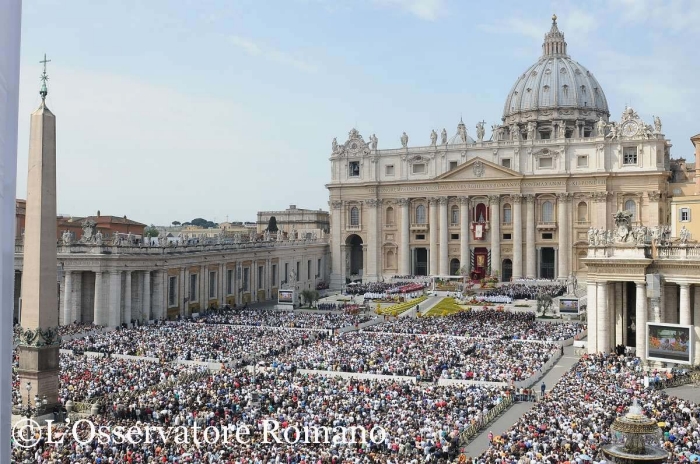
(Vatican Radio) On Thursday Pope Benedict XVI celebrated Mass marking the 50th anniversary of the Opening of the Second Vatican Council and launching the Year of Faith.
Below the full text of the Holy Father’s Homily:

Dear Brother Bishops,Dear brothers and sisters!

Today, fifty years from the opening of the Second Vatican Ecumenical Council, we begin with great joy the Year of Faith. I am delighted to greet all of you, particularly His Holiness Bartholomaois I, Patriarch of Constantinople, and His Grace Rowan Williams, Archbishop of Canterbury. A special greeting goes to the Patriarchs and Major Archbishops of the Eastern Catholic Churches, and to the Presidents of the Bishops’ Conferences. In order to evoke the Council, which some present had the grace to experience for themselves - and I greet them with particular affection - this celebration has been enriched by several special signs: the opening procession, intended to recall the memorable one of the Council Fathers when they entered this Basilica; the enthronement of a copy of the Book of the Gospels used at the Council; the consignment of the seven final Messages of the Council, and of the Catechism of the Catholic Church, which I will do before the final blessing. These signs help us not only to remember, they also offer us the possibility of going beyond commemorating. They invite us to enter more deeply into the spiritual movement which characterized Vatican II, to make it ours and to develop it according to its true meaning. And its true meaning was and remains faith in Christ, the apostolic faith, animated by the inner desire to communicate Christ to individuals and all people, in the Church’s pilgrimage along the pathways of history.

The Year of Faith which we launch today is linked harmoniously with the Church’s whole path over the last fifty years: from the Council, through the Magisterium of the Servant of God Paul VI, who proclaimed a Year of Faith in 1967, up to the Great Jubilee of the year 2000, with which Blessed John Paul II re-proposed to all humanity Jesus Christ as the one Savior  yesterday, today and forever. Between these two Popes, Paul VI and John Paul II, there was a deep and profound convergence, precisely upon Christ as the centre of the cosmos and of history, and upon the apostolic eagerness to announce him to the world. Jesus is the centre of the Christian faith. The Christian believes in God whose face was revealed by Jesus Christ. He is the fulfilment of the Scriptures and their definitive interpreter. Jesus Christ is not only the object of the faith but, as it says in the Letter to the Hebrews, he is “the pioneer and the perfecter of our faith” (12:2).

Today’s Gospel tells us that Jesus Christ, consecrated by the Father in the Holy Spirit, is the true and perennial subject of evangelization. “The Spirit of the Lord is upon me, because he has anointed me to preach the good news to the poor” (Lk 4:18). This mission of Christ, this movement of his continues in space and time, over centuries and continents. It is a movement which starts with the Father and, in the power of the Spirit, goes forth to bring the good news to the poor, in both a material and a spiritual sense. The Church is the first and necessary instrument of this work of Christ because it is united to him as a body to its head. “As the Father has sent me, even so I send you” (Jn 20:21), says the Risen One to his disciples, and breathing upon them, adds, “Receive the Holy Spirit” (v.22). Through Christ, God is the principal subject of evangelization in the world; but Christ himself wished to pass on his own mission to the Church; he did so, and continues to do so, until the end of time pouring out his Spirit upon the disciples, the same Spirit who came upon him and remained in him during all his earthly life, giving him the strength “to proclaim release to the captives and recovering of sight to the blind, to set at liberty those who are oppressed” and “to proclaim the acceptable year of the Lord” (Lk 4:18-19).

The Second Vatican Council did not wish to deal with the theme of faith in one specific document. It was, however, animated by a desire, as it were, to immerse itself anew in the Christian mystery so as to re-propose it fruitfully to contemporary man. The Servant of God Paul VI, two years after the end of the Council session, expressed it in this way: “Even if the Council does not deal expressly with the faith, it talks about it on every page, it recognizes its vital and supernatural character, it assumes it to be whole and strong, and it builds upon its teachings. We need only recall some of the Council’s statements in order to realize the essential importance that the Council, consistent with the doctrinal tradition of the Church, attributes to the faith, the true faith, which has Christ for its source and the Church’s Magisterium for its channel” (General Audience, 8 March 1967). Thus said Paul VI.

We now turn to the one who convoked the Second Vatican Council and inaugurated it: Blessed John XXIII. In his opening speech, he presented the principal purpose of the Council in this way: “What above all concerns the Ecumenical Council is this: that the sacred deposit of Christian doctrine be safeguarded and taught more effectively […] Therefore, the principal purpose of this Council is not the discussion of this or that doctrinal theme… a Council is not required for that… [but] this certain and immutable doctrine, which is to be faithfully respected, needs to be explored and presented in a way which responds to the needs of our time” (AAS 54 [1962], 790,791-792).

In the light of these words, we can understand what I myself felt at the time: during the Council there was an emotional tension as we faced the common task of making the truth and beauty of the faith shine out in our time, without sacrificing it to the demands of the present or leaving it tied to the past: the eternal presence of God resounds in the faith, transcending time, yet it can only be welcomed by us in our own unrepeatable today. Therefore I believe that the most important thing, especially on such a significant occasion as this, is to revive in the whole Church that positive tension, that yearning to announce Christ again to contemporary man. But, so that this interior thrust towards the new evangelization neither remain just an idea nor be lost in confusion, it needs to be built on a concrete and precise basis, and this basis is the documents of the Second Vatican Council, the place where it found expression. This is why I have often insisted on the need to return, as it were, to the “letter” of the Council – that is to its texts – also to draw from them its authentic spirit, and why I have repeated that the true legacy of Vatican II is to be found in them. Reference to the documents saves us from extremes of anachronistic nostalgia and running too far ahead, and allows what is new to be welcomed in a context of continuity. The Council did not formulate anything new in matters of faith, nor did it wish to replace what was ancient. Rather, it concerned itself with seeing that the same faith might continue to be lived in the present day, that it might remain a living faith in a world of change.

If we place ourselves in harmony with the authentic approach which Blessed John XXIII wished to give to Vatican II, we will be able to realize it during this Year of Faith, following the same path of the Church as she continuously endeavors to deepen the deposit of faith entrusted to her by Christ. The Council Fathers wished to present the faith in a meaningful way; and if they opened themselves trustingly to dialogue with the modern world it is because they were certain of their faith, of the solid rock on which they stood. In the years following, however, many embraced uncritically the dominant mentality, placing in doubt the very foundations of the deposit of faith, which they sadly no longer felt able to accept as truths.

If today the Church proposes a new Year of Faith and a new evangelization, it is not to honor an anniversary, but because there is more need of it, even more than there was fifty years ago! And the reply to be given to this need is the one desired by the Popes, by the Council Fathers and contained in its documents. Even the initiative to create a Pontifical Council for the promotion of the new evangelization, which I thank for its special effort for the Year of Faith, is to be understood in this context. Recent decades have seen the advance of a spiritual “desertification”. In the Council’s time it was already possible from a few tragic pages of history to know what a life or a world without God looked like, but now we see it every day around us. This void has spread. But it is in starting from the experience of this desert, from this void, that we can again discover the joy of believing, its vital importance for us, men and women. In the desert we rediscover the value of what is essential for living; thus in today’s world there are innumerable signs, often expressed implicitly or negatively, of the thirst for God, for the ultimate meaning of life. And in the desert people of faith are needed who, with their own lives, point out the way to the Promised Land and keep hope alive. Living faith opens the heart to the grace of God which frees us from pessimism. Today, more than ever, evangelizing means witnessing to the new life, transformed by God, and thus showing the path. The first reading spoke to us of the wisdom of the wayfarer (cf. Sir 34:9-13): the journey is a metaphor for life, and the wise wayfarer is one who has learned the art of living, and can share it with his brethren – as happens to pilgrims along the Way of Saint James or similar routes which, not by chance, have again become popular in recent years. How come so many people today feel the need to make these journeys? Is it not because they find there, or at least intuit, the meaning of our existence in the world? This, then, is how we can picture the Year of Faith: a pilgrimage in the deserts of today’s world, taking with us only what is necessary: neither staff, nor bag, nor bread, nor money, nor two tunics – as the Lord said to those he was sending out on mission (cf. Lk 9:3), but the Gospel and the faith of the Church, of which the Council documents are a luminous expression, as is the Catechism of the Catholic Church, published twenty years ago.

Venerable and dear Brothers, 11 October 1962 was the Feast of Mary Most Holy, Mother of God. Let us entrust to her the Year of Faith, as I did last week when I went on pilgrimage to Loreto. May the Virgin Mary always shine out as a star along the way of the new evangelization. May she help us to put into practice the Apostle Paul’s exhortation, “Let the word of Christ dwell in you richly, teach and admonish one another in all wisdom […] And whatever you do, in word or deed, do everything in the name of the Lord Jesus, giving thanks to God the Father through him” (Col 3:16-17). Amen.
Year of Faith


Year of Faith

Thursday, 10/11/2012, started the Year of Faith called by Pope Benedict XVI. I'm wondering how I could make this time meaningful to me. I hope to occasionally blog some of my thoughts. The Year of Faith commemorates the fiftieth anniversary of the opening of the Second Ecumenical Council in the Vatican, and the twentieth anniversary of the Catechism of the Catholic faith.

The USCCB tells us this: “The upcoming Year of Faith is a ‘summons to an authentic and renewed conversion to the Lord, the One Savior of the world’ (Porta Fidei 6). In other words, the Year of Faith is an opportunity for Catholics to experience a conversion – to turn back to Jesus and enter into a deeper relationship with him. The ‘door of faith’ is opened at one’s baptism, but during this year Catholics are called to open it again, walk through it and rediscover and renew their relationship with Christ and his Church.”

I think, for most of us, especially myself, we can participate in this Year of Faith into two ways: 1) to catechize ourselves, to learn our faith in a more deeper sense, and; 2) to evangelize others, to bring others to our faith. I think the first is important because we live in a very secularized society. Know it or not, it has an effect on us, in the TV we watch, in the secular books we read, in common conversations. God has been kick-out of the public forum. Our children cannot pray in school, it is not politically correct to discuss our faith in public. Yet, that is exactly what we are called to do. To do so, we need to know the subject matter, it would be hard to make any arguments at all if we do not know the very faith that we profess; and sadly, many of us don't know our faith. Our religious education more or less stopped in the eighth grade unless we were blessed to attend a Catholic high school. Few of us read Scripture as a family and talked about what we read. We are fed at Sunday Mass by the readings and a homily, if that homily was well prepared, but how many of us Catholics do attend Mass regularly?

There are so many souls out there looking to be filled, to satisfy that inner emptiness, and many don't know what that emptiness is. They fill this void with alcohol or drugs, pornography and material things – the more the better. But it does not fill them, and so they think more alcohol or more drugs will fill that need. We worry about our physical health, our mental health, our emotional health, but how much time and effort we spend on our spiritual selves. Those seeking to fill that void only need to turn to God. That longing for the Other, our Creator, is built within us by the very act of our creation and the infusion of our souls at conception. That void is simply filled when we turn away from ourselves and focus on God and our fellow man. Joyful we are when we experience that right relationship with God, when we do something, no matter how simple, for another without expectation of repayment.

Many of us have not been happy with all the changes stemming from Vatican II. It seems there were too many changes too quickly, it seems we were on a runaway train; at times it seems we were changing for the sake of change. Certain elements in the church were not satisfied; they wanted more and more change. Some things that have bothered me are the loss of the sacredness, the relegation of the Tabernacle away from the central focus to some side room, the building of new churches looking more like theaters around, Perpetual Adoration and holy hours. Yet I have no doubt that the Holy Spirit was working with the Pope and the Bishops during the Council leading the church in the direction the Spirit wanted it to go. I miss the Latin, though I didn't understand it, I had to follow along in my Missile. It was comforting matter were in the world we were we would hear the same words. But there were so many at Mass who prayed their personal devotions or the rosary during the Mass and not the Sacrifice that was being offered. Our attention was only brought to focus with the ringing of the bells at the Consecration. I miss the church bells, the incense, and like I said the feeling of holiness and sacredness in the presence of God in church.

We are in a period of correction. In some ways John Paul II and Benedict XVI have put on the brakes. In the long run I see a very vibrant church with true and active Catholics.

So I will begin this Year of Faith by reading some of the Vatican II documents, starting with the Dogmatic Constitution on Divine Revelation (Dei Verbum). I will try to be a more public Catholic and look for opportunities to call others to faith.

I hope you will make this year meaningful, and I hope you'll join me in my efforts to learn my faith more deeply and to call others to grow in their relationship with God.