Tuesday, October 13, 2015
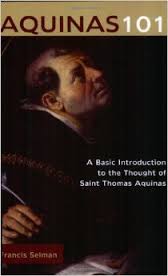
Aquinas 101
Wednesday, July 1, 2015
Sunday, November 16, 2014
Book Recommendation: A Call to Joy
-- Matthew Kelly - A Call to Joy, p 43.This is a great book. DynamicCatholic.com
Sunday, May 25, 2014
New Book by Scott Hahn - Sounds Great

I just read an excerpt from Scott Hahn's new book and it sounds great. Please go here to read the excerpt.
And here is the link to the Amazon page.
After reading the excerpt, I think you are going to be as enthused about it as I am.
Thursday, October 3, 2013
Review - Audio Lecture - The Great Courses - The New Testament
I’m a pretty big fan of The Teaching Company’s Great Courses audio lectures. I’m purchased a few and I’ve loaned a few from the library. I especially enjoyed The Catholic Church – A History, Reason and Faith, and St. Augustine – Philosopher and Saint, to mention a few.
But I must express a warning about the lecture series called the New Testament by
Professor Bart D. Ehrman. Mr. Ehrman is your preverbal secularist academic who finds nothing of positive value in the NT. He goes out of his way to constantly find inconsistencies and tried to use logic or reasoning to pooh-pooh whatever book he is addressing. We are all aware that there are inconsistencies. They were written by humans relying on either their own eyewitness of events, oral stories being passed on, and early extant and non-extant written documents. He doubts the four evangelists wrote the gospels citing they did not contain the name of the author. Yes, the common practice at the time was not to name the work or identify the author, though at times the name of the work and or author would be written on the rolled scroll. So again he argues Mark, Matthew, Luke and John did not write the gospels.
He indicates there were no living eyewitnesses when the books were written. This is not true, some of the early church fathers regularly conversed with some eyewitnesses. John the youngest apostle could have been alive we into the 90s A.D.
There is a diatribe as he argues Paul taught a completely different religion than did Jesus. Well, Paul was not an eyewitness to Jesus. What Paul learned was learned from other Christians. There was tremendous growth and development in these early years and he ignores that the church was being led by the Holy Spirit. But he tries to use this to debunk both Jesus and Paul.
Do not waste your money and time on this. His unspoken agenda is clear. This is the kind of education our children are being taught in our institutes of “higher” education. A shame. No matter why our youth are turning away from faith. And I’m sure this secularization is pervasive in academia including “catholic universities.”
Sunday, September 1, 2013
Book Review: Bonaventure: Mystical Writings
I just finished this book and wanted to recommend it to anyone interested in St. Bonaventure and in mystical writings. It is not a very hard read, but some terms may throw you. You should read it in a quiet thoughtful setting. Please see the short review below. Some of us have been to Mount Verna where St. Francis received the stigmata. In St. Bonaventure’s love for Francis he explored St. Francis’ rapture in contemplation. I believe St. Bonaventure also experienced that rapture which is a gift from God. He must have experienced it in order to write about it.
Bonaventure: Mystical Writings. By Fr. Zachary Hayes, O.F.M. Crossroad. 152 pages. (Available from Amazon.com Kindle edition.)
In this short and readable book, Fr. Zachary Hayes attempts to make accessible the profound trinitarian and christological theology of the Seraphic Doctor, St. Bonaventure. For centuries the great St. Bonaventure has been overshadowed by his contemporary and friend St. Thomas Aquinas. Fr. Hayes’s work helps bring St. Bonaventure out of the shadows. To do so Fr. Hayes utilizes the general structure of one of St. Bonaventure’s best known works, The Journey of the Soul into God. Fr. Hayes incorporates into his book many illuminating texts which give us a sense of the profundity of Bonaventurian thought.
– (New Oxford Review)
Excerpt from the book, page 140:
At the end of the Soliloquy, Bonaventure brings his reflections together in the form of prayer.
I pray, my God, that I may know you; that I may love you; and that I may rejoice in you forever. And if I am not able to experience this to the fullest in this life, may at least my knowledge and love of you increase in this life that my joy may be full in the next life; that the joy which I here hold in hope may there be brought to fulfillment. O Lord, our Father, you counseled, or rather through your Son you commanded that we ask for this fullness of joy; and you promised to hear our prayer. I ask of you, O Lord, for that which, through your Wonder-Counselor, you encouraged us to ask for and promised to grant: that our joy may be full. Meanwhile, let my mind meditate on this joy; let my tongue speak of it; let my heart desire it; let my words extol it; let my soul hunger for it; let my flesh thirst for it; and let my whole substance yearn for it, until I enter into the joy of my God who is Three and One, blessed forever. Amen. (Soliloquy 4.27)
Happy reading.
Saturday, November 24, 2012
Book Recommendation: Will Many Be Saved
It starts:
Author explains urgency of New Evangelization Book explores Vatican II teaching about salvation and how it relates to evangelization efforts today.
By Mary DeTurris Poust - OSV Newsweekly, 11/25/2012
Knowing who will or will not get into heaven is a tricky subject for most people of faith, but author Ralph Martin tackles it head on in his new book, “Will Many Be Saved? What Vatican II Actually Teaches and Its Implications for the New Evangelization” ($24, William B. Eerdmans Publishing Co.). Martin recently spoke to Our Sunday Visitor via email from Rome, where he was serving as a theological expert during the Synod of Bishops on the New Evangelization.
Our Sunday Visitor: Why did you feel this book was necessary at this time?
Ralph Martin: I’ve been concerned for a long time that a presumption that virtually everyone is saved has taken hold in the minds of many Catholics. This obviously undermines motivation for evangelization, not to mention holiness and obedience to the Word of God. The teaching of Vatican II has been very much misunderstood on this point, and the book tries to clearly and decisively set the record straight. It is, indeed, possible under certain conditions for those who have never heard the Gospel to be saved, but as the Constitution on the Church from Vatican II says in Section 16, “very often” these conditions are not met and peoples’ salvations are at risk unless they hear the Gospel and respond.
OSV: We hear the term “New Evangelization” a lot in the Church today, and yet I think many Catholics are still unsure of what that means. Can you explain “New Evangelization” to the person in the pew?
Martin: First of all let’s define evangelization. I think the best definition I know is that given by Blessed John Paul II in his encyclical “Mission of the Redeemer” (Redemptoris Missio):
“The proclamation of the Word of God has Christian conversion (in original) as its aim: a complete and sincere adherence to Christ and his Gospel through faith ... Conversion means accepting, by a personal decision, the saving sovereignty of Christ and becoming his disciple” (No. 46).
Evangelization in its broad sense can refer to everything that the Church does, but the core definition has to do with conversion — helping people come to faith in Christ and surrender their lives to him.
The best definition of “New Evangelization” is again given by Blessed John Paul II in his encyclical. He makes a threefold distinction. Primary evangelization is directed toward those who have never heard the Gospel before. Pastoral care is directed toward those living in some relationship with Christ. “New Evangelization or re-evangelization” is directed toward those from traditionally Christian cultures or backgrounds “where entire groups of the baptized have lost a living sense of the faith, or even no longer consider themselves members of the Church, and live a life far removed from Christ and his Gospel” (No. 33).
The New Evangelization is new in whom it is addressed to, those who may have been baptized or practiced their faith at one time, but now are no longer living a relationship of friendship with Christ. It is also new in terms of who does it: us! And it is new in the cultural situation in which it is conducted — a de-Christianized culture where respect for God and his ways are no longer honored, but rather mocked and attacked.
This doesn’t mean we all need to be preachers. Evangelization can be a very simple sharing of our faith with someone who asks a question; or passing on a book on the spiritual life to someone who would benefit from reading it; or inviting someone who would benefit by hearing more about the faith to a parish mission talk, etc.
Read the rest here.
Sunday, August 19, 2012
Has America become a nation of Heretics? No!
The August 5th issue of Our Sunday Visitor has an article about a book by Ross Douthat’s new book entitled “Bad Religion: How We Became a Nation of Heretics.” It reports that the book is quite a pessimistic. Now,
Mr. Douthat works for The New York Times. Knowing the bent of that newspaper, I wouldn’t expect anything else but pessimism from Mr. Douthat.
So it inspired me to write these thoughts. Yes, the Church is and has been in decline for some time. It is even understandable given the secularization of our society, the turn to materialism, hedonism, “me first”, just do it,” the loss of respect for authority, the sexual revolution, even the palpable agenda of our government to squash religion. I could go on and on listing the reasons. The “downsizing” of the church is not only realized here but globally.
I doubt if I will buy or read Mr. Douthat’s book. Perhaps he is doing nothing more than calling our attention to a known fact. Everything, including the church is subject to change. Everything has its ebbs and flows. The one thing to remember is God is in control.
The domestic church, the family has changed. We no longer eat together, during the week we seldom see each other with both parents working, kids going to this or that function. We have a myriad of distractions and a host of things that refocus our attention. Not to mention the kids and even many of us “adults” addicted to computer games. Dad/Mom come home from work, a quick easy to make dinner and we plop in front of the boob tube in hopes of some escapism to get our minds out of reality and the exertions of work, to be entertained. Then during this most vulnerable time be are met with the propaganda of TV commercials – you got to have this, you got to have that, you got to be thin, sexy, beautiful, etc. Are we susceptible? You bet we are. Like the ancient Israelites, we all have our Ba’als. Not gods mind you, but we do worship them, our addictions; drugs, alcohol, power, money, the need to put others down to make us feel better about ourselves, even violence – I can go on.
“We’re not in Kansas anymore” – we’re no longer in quiet and comfortable surroundings. Gone are the days, before TV, before high-tech, when a family would gather together and perhaps one would read the Bible, or they would pray together. We’re even afraid, yes, afraid, to talk to our children about faith. Where has the responsibility to get each other to heaven gone?
Then we experienced Vatican II - a very traumatic event for the Church. Yes, it was needed, very much so - just like an operation is needed at times -but still traumatic. The liberals ran away with it; change, change, and more change. We lost our sound footing. The strong foundation we knew we could always go to was in flux.
Now let me turn on this pessimism to optimism. First, again, God is in control. There is a strong core of faithful Catholics that will bring us through this. I have seen them. I experience them, I am part of them. We love God, deeply, we acknowledge we are all sinners and go to Him for forgiveness. We know it is our responsibility to love our neighbor, whether they are fallen away Catholics or some other religion, or none at all. We know that we are called to serve our Church and each other. We find time for Mass, prayer and service. Many of us find the rewards of joining in the prayer of the Church by praying the Liturgy of the Hours. We understand that the Holy Spirit is guiding the Magisterium and therefore we listen to it, we obey it. We have put aside our televisions and our mind numbing toys
There is hope for God is in control. Do you not see it? Look at the rise in our youth craving for structure, for something to hold on to, to believe in. They find it in Church. Where is there growth? Just look at conservative churches. Growth is there. If your church is moderate there will be no growth. If your church is liberal, it will decline. The liberals of the past couple of decades are growing old and dying off, replaced by true Catholics. When you dismiss the authority of the church you are in the tide of a flowing river. Change for the sake of change has a fracturing element to it, unity diminishes. Just look at our Protestant brothers and sisters and their many denominations. Their root cause is a lack of central authority – each one goes their own way.
Why is it that the very things that inspires Catholics are not in our churches, or hard to find: Adoration, Holy Hours, litanies, devotions, Gregorian chant, etc. If your church does not offer these go to one that does. Associate with these people and you will be filled and satisfied.
There is reason to be hopeful. God is in control.
Tuesday, September 6, 2011
"Catholicism - Fr. Robert Barron

The long awaited series hosted by Fr. Robert Barron will air this Fall on PBS, The Catholic News Agency says. So mark your calendars.
The article starts:
A high-definition series exploring the beauty and richness of Catholicism is set to air on over 80 public television stations across the U.S. this fall.
Fr. Robert Barron, head of Word on Fire media and the visionary behind the “Catholicism” series, told CNA his hope is that the films will be used “as a tool of evangelization for everybody.”
“I want the series to go out beyond the walls of the Church,” he said in an Aug. 10 interview. “That's why we're so happy it's going to be on public television.”
Set in 50 locations in over 16 countries, the series examines major themes within the Church such as the person of Christ, the mystery of God, the Virgin Mary, Saints Peter and Paul, the “missionary thrust of the Church,” the liturgy and the Eucharist, prayer and spirituality and the saints, Fr. Barron said.
See the rest of the article here.
There is also a hard cover companion book "Catholicism: A Journey to the Heart of the Faith" available from Amazon.com, and there is a Kindle edition available too.
Thursday, June 16, 2011
Book Review - Parallel Lives by Richard F. Cassady

Excerpt:
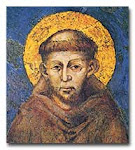
By comparison, the achievement of Francis of Assisi marked a beginning rather than an end. It is true that Francis's dream of a monastic order that renounced the encumbrance and corruption of property was frustrated by the papacy and by his own successors. Mr. Cassady regards this as the destruction of Francis's work and points to the magnificent and costly double basilica at Assisi as the ultimate betrayal. But it is more complicated than that.
Although the Franciscans were obliged to accept a limited form of property holding, their founder's ideal of a group of missionaries living among the people but marked out from them by a simpler and purer way of life survived intact. The Franciscans transformed the spiritual life of 13th-century Europe, especially among the laity in the growing cities, very much as the Benedictines had transformed the spiritual life of a more rural society centuries before. Although the initial inspiration waned with the passing decades, as such inspirations always do, the Franciscans remained a significant influence on Christian spirituality until the Reformation, and their missionary work since the 16th century has been more impressive, over a longer period, than that of any other group.
Read the entire article here.